Use case: Medical tourism
Reproducible before-and-after photos when the patient flies home
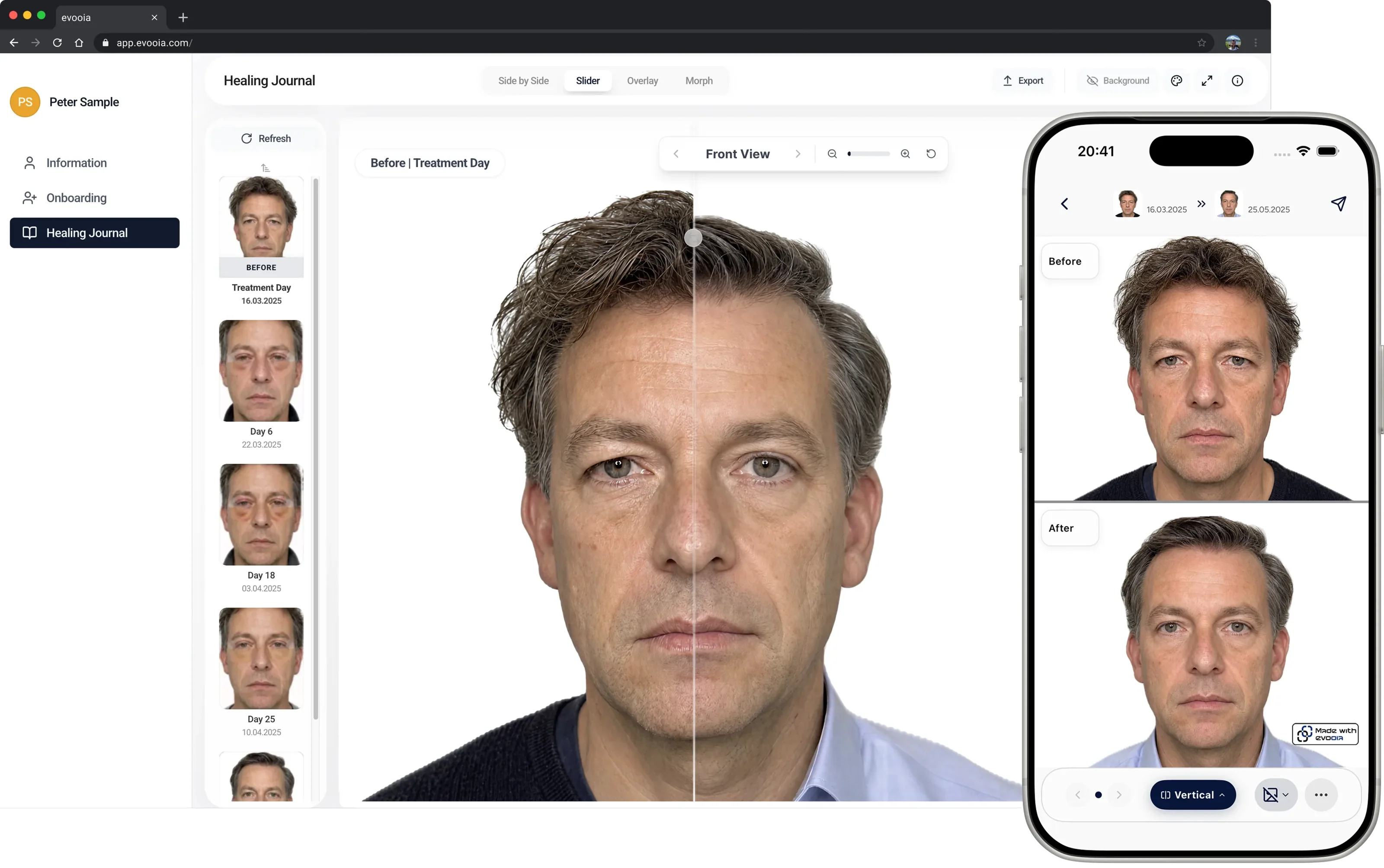
In medical tourism, the patient never returns to the same room, lighting, or camera. They travel home, often abroad, and the result only shows weeks or months later, too late for in-clinic-only documentation. evooia captures a standardised baseline in the clinic, then guides optional follow-up photos the patient takes themselves, anywhere.
The workflow
One standard, from the clinic to the patient's home
The same reproducibility standard across the whole journey, so the baseline taken in your clinic and the follow-up taken abroad are directly comparable.
Baseline on arrival
Staff capture the SERALIQ™ baseline during the visit, the reference for every later photo.
Guided capture from home
At home, the app guides the patient through the same SERALIQ™ capture on their phone.
Comparable outcome record
Each photo syncs to your dashboard as a comparable pair, with consent and notes.
The difference
Location-independent capture: what fixed-room systems can't do
Hardware studios like Canfield or QuantifiCare achieve reproducibility through fixed geometry in a single room. The moment the patient leaves it, that ends. Freehand apps, in turn, depend on the clinician holding the device. With evooia the standard travels with the patient: the same alignment that runs in the clinic also runs at home on their phone.
The SERALIQ™ standard, everywhere
SERALIQ™ (Standardised Environment for Reproducibility, Alignment, Lighting and Image Quality) sets the capture standard, and on every photo the app checks ambient lighting, distance, angle and framing against it, on iPhone and iPad, front or back camera, in clinic and at home. AlignedCapture™ then aligns each follow-up onto the in-clinic baseline, so a photo taken far from the clinic becomes standardised visual documentation rather than a selfie.
Built for international patients
What makes it work across borders
Medical tourism adds language, distance, and data-protection questions on top of the imaging problem. evooia is designed for all of them.
Multilingual patient guidance
Visual, multilingual guidance (currently English and German) means language is never a barrier to a correctly aligned photo.
Pre-arrival baseline
Capture a baseline before the patient travels, so planning starts from a comparable image, not an ad-hoc photo.
Swiss-built, privacy-aligned
Developed and hosted in Switzerland, and compliant with strict data privacy regulations across regions, for images that cross borders.
Continuous visual documentation
Gradual results, healing, and longitudinal change are captured over months from home, not lost at the airport.
For your patients
The same record, on every device
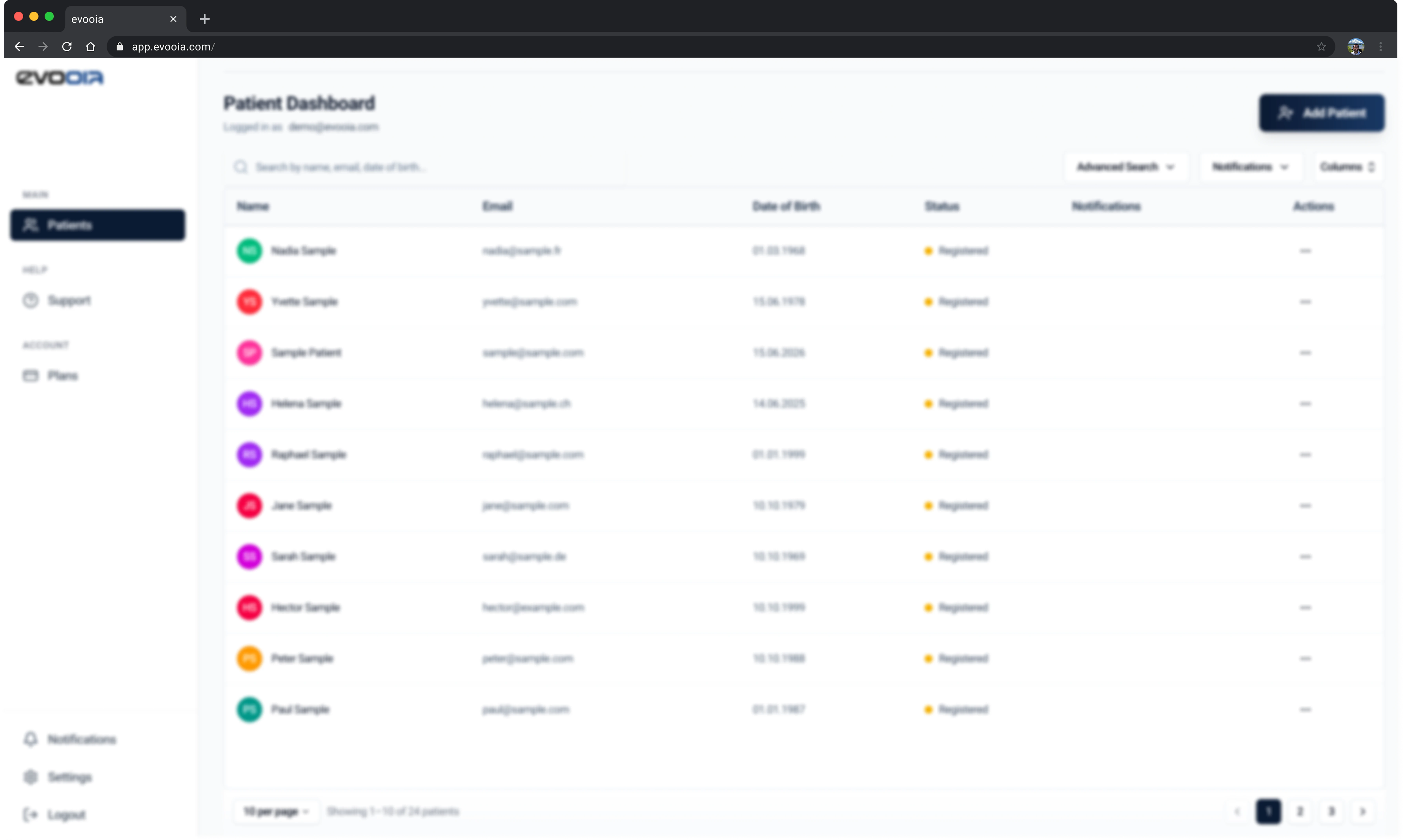
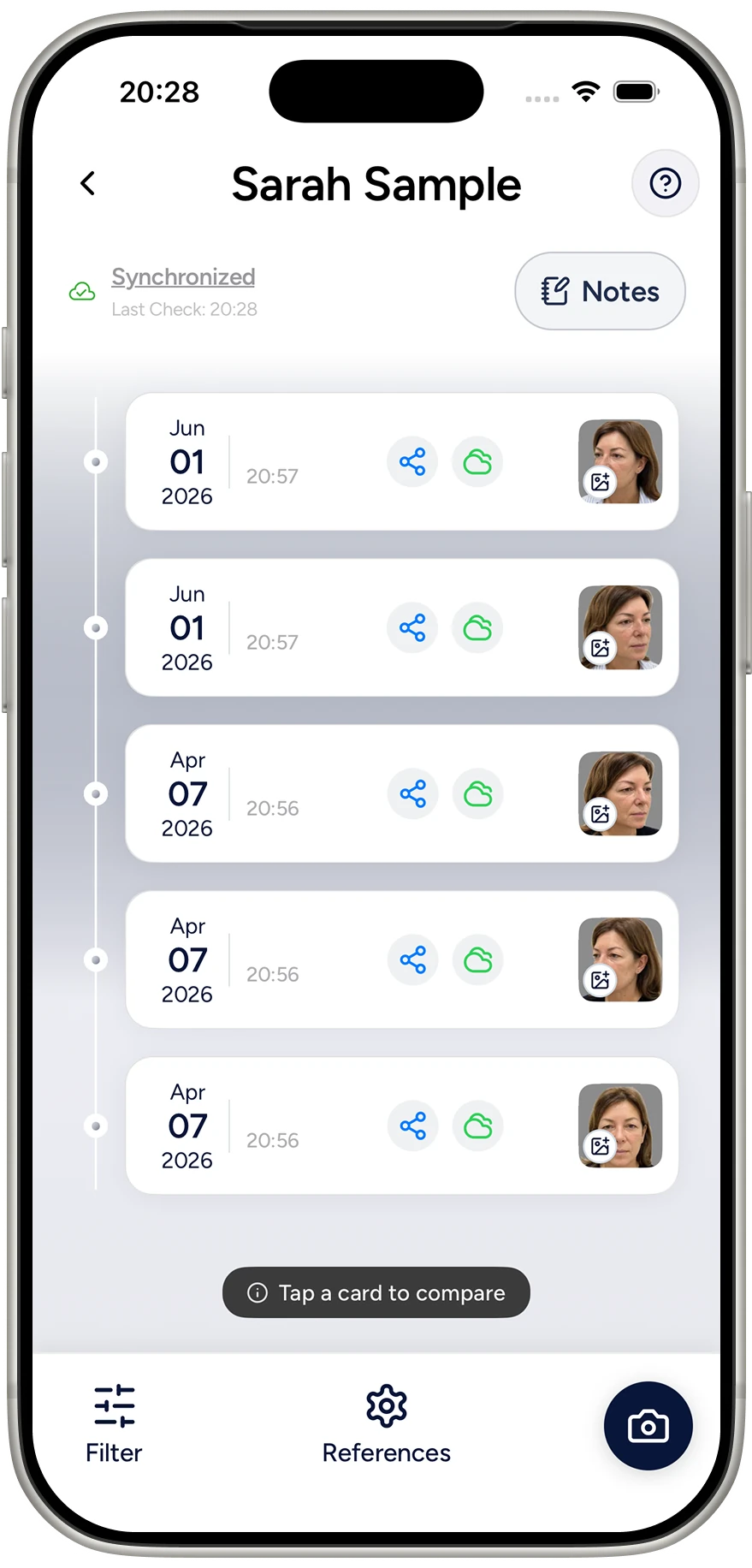
Every guided capture syncs securely and instantly between the patient's phone and your clinic's web dashboard. One shared record, identical on both sides.
One record, in sync on both devices
Captures from the patient's phone reach your dashboard within seconds. The patient and your team see exactly the same record.
Connected, even after they fly home
Every capture from home keeps the patient connected across the whole journey, not just on the treatment day.
Private, not posted
A secure clinical record, not casual selfies or social posts. Sensitive photos stay protected, not in a camera roll or on Instagram.
Data protection they can trust
Every image is handled under strict data privacy and security standards, built for patients sharing photos across borders.
FAQ
Medical tourism photo documentation, answered
The questions clinics treating international patients ask most.
Can patients take their own follow-up photos after they fly home?+
How does evooia keep before-and-after photos comparable across different countries?+
Is it suitable for international patients who do not speak the clinic's language?+
Can we capture a baseline before the patient travels to the clinic?+
Where is patient data stored?+
Document outcomes wherever your patients are
See how a standardised in-clinic baseline plus location-independent follow-up capture keeps your international patients' before-and-after records comparable and defensible.